
Joy Under Contract
Reading the fine print of General Orders, No.3 and the resistance of unpoliced joy.

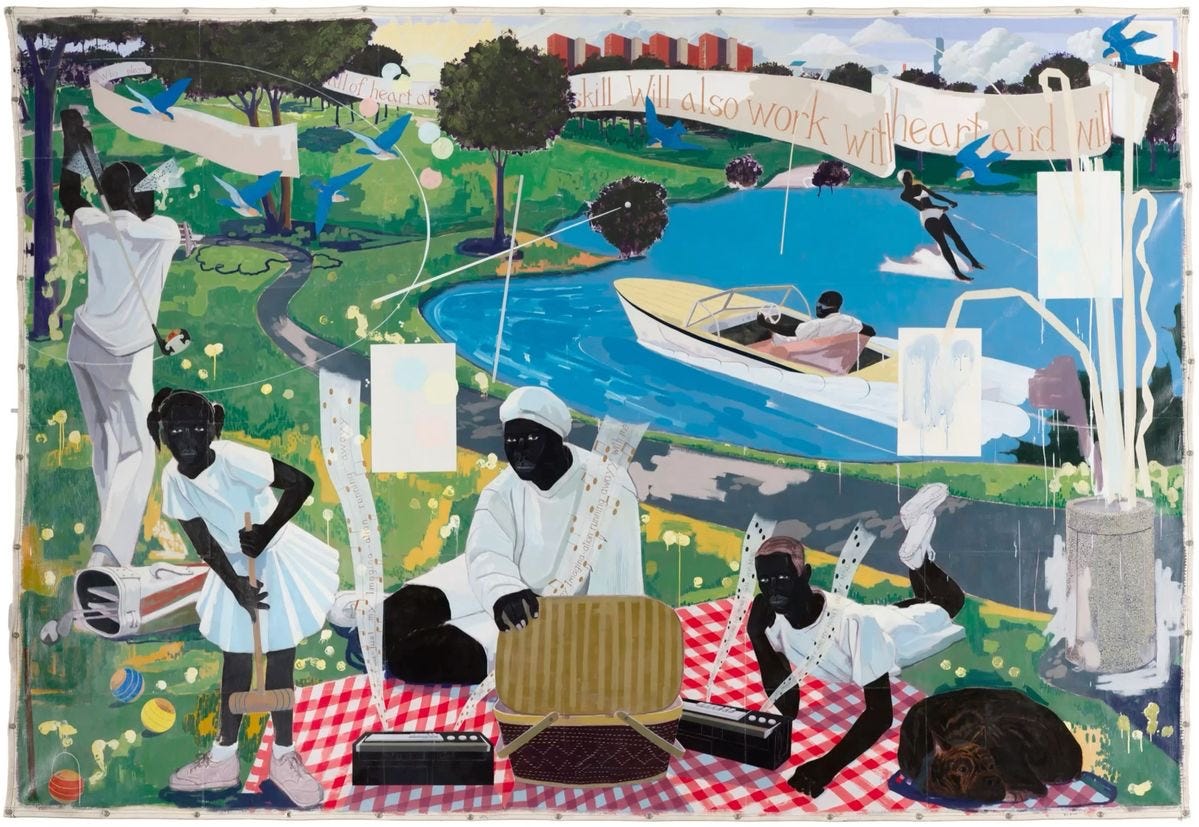
Artist: Kerry James Marshall, Past Times (1997)
It’s almost like clockwork that we complain. Just like seeing the late MLK on a party flyer to commemorate his life and legacy (because why?), Juneteenth, in some spaces has turned into a different kind of celebration. I’m not talking about the cookout or the block party, with Sounds of Blackness Optimistic followed by Yung Miami’s Spend Dat blasting kind of celebration. I’m talking about the sanitized, corporate commercialization of the day. A sea of 50-11 day parties equipped with hookah, where droves of people stand around staring at each other, doesn’t exactly scream freedom to me. Honestly, truly.
But after reading the actual words of General Orders, No. 3 forwards and backwards, I had to check my own judgment. Maybe that type of unbothered, standing against the wall, staring into the crowd celebration is a form of resistance, just one that I’m less personally inclined to participate in. After all, the first official Juneteenth parks weren’t chosen by happenstance. Spaces like Emancipation Park in Houston were bought and paid for by Black people so nobody could police their joy. When you read the fine print of history, you realize why it’s imperative that we fight hard to celebrate entirely on our own terms.
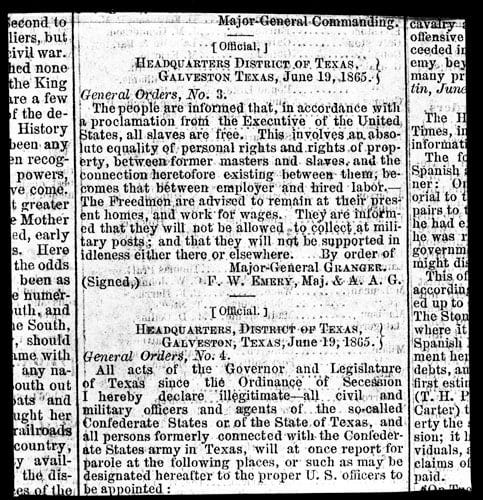
U.S. Army. (1865). General Orders, No. 3 (Record Group 393, Part II, Entry 5543). District of Texas. National Archives and Records Administration. https://www.archives.gov/news/articles/juneteenth-original-document
The document glosses over the “absolute equality” rhetoric to rush to the government’s preferred mandate. Freedom was so short-lived that our ancestors went from being legally enslaved to being legally locked into contract labor. It wasn’t an intentional leap toward civil rights; it was a government terrified of an impending economic collapse. Freedom was conditioned to protect the cotton supply chain, because if it didn’t make dollars…
When you read the order through this analytical lens, its warning against “idleness” serves as historical proof that the state still only valued Black people for their physical output.
Yeah, you’re free, but stay where you are.
Yeah, you’re free, but go back to work.
Yeah, you’re free, but don’t dare gather together.
Yeah, you’re free, but don’t… exist.
These words transport me back to a pivotal moment in the movie Sinners: “And just for a few moments, we were free.” The cinematic brilliance of witnessing brotherhood and Mother Nature collide in such an intimate, profound moment is unforgettable. It serves as a necessary lesson to challenge our own judgments and side eyes.
Because no matter how we choose to celebrate today, or how deeply we grapple with the history forgotten on that textured page, we deserve to honor the spectrum of our experience in full. From the pride of seeing Juneteenth flags swaying in the sky to the heartache of realizing how quickly Black joy was penalized, it all matters. The bitter and the sweet, and all the stickiness in between. It all means something.
We owe it to ourselves to flip the script on the “don’t do that” mentality. To claim a loud, radically unpoliced joy—whether that looks like quiet reflection or a crowded, chaotic day party produces a collective statement that we aren’t bound by anyone’s contract anymore.
Happy Juneteenth, kinfolk.